TIS Circuit: Everything You Need to Know About This Critical Electronic System
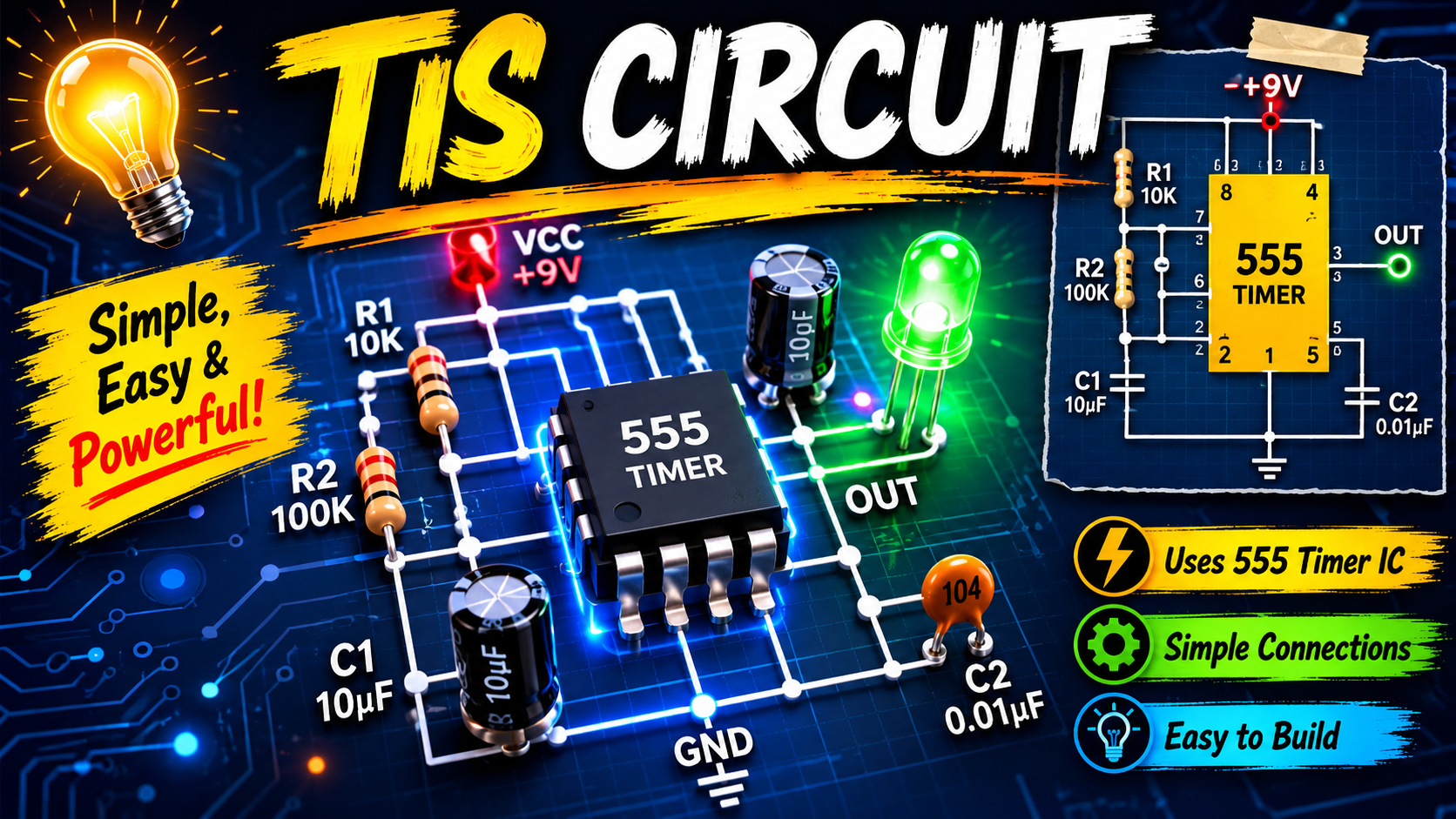
Introduction
In the ever-evolving world of electronics, the TIS circuit plays a pivotal role in ensuring devices operate efficiently and safely. From industrial automation to automotive systems, understanding the workings, types, and applications of TIS circuits can help engineers, technicians, and hobbyists optimize performance. This comprehensive guide dives deep into what a TIS circuit is, its components, operational principles, common applications, troubleshooting techniques, and future trends. By the end, you’ll have a solid grasp of this critical electronic system.
What is a TIS Circuit?
A TIS circuit, short for Transistor-Integrated System circuit, refers to an integrated electronic configuration designed to manage signals, power, or control mechanisms within a device. Unlike conventional circuits, TIS circuits combine transistors, resistors, capacitors, and sometimes microcontrollers on a single platform, providing both processing and switching capabilities. These circuits are widely recognized for their compact design, low power consumption, and high reliability.
Key Features of TIS Circuits
- Compactness: Reduces space requirements in electronic devices.
- High Efficiency: Optimized transistor arrangements reduce energy loss.
- Integrated Control: Can handle multiple signal inputs and outputs efficiently.
- Reliability: Reduced external wiring minimizes points of failure.
How TIS Circuits Work
Understanding the operation of a TIS circuit begins with its core principle: transistor switching and amplification. Transistors act as both switches and amplifiers, controlling the flow of current through various branches of the circuit.
Working Mechanism
- Input Signal Reception: The circuit receives analog or digital input signals.
- Signal Processing: Integrated transistors and other components modify, amplify, or redirect the signals as needed.
- Output Execution: The processed signal is sent to actuators, displays, or other downstream devices.
This process allows the TIS circuit to perform functions like logic processing, timing control, and power management in a single compact design.
Components of a TIS Circuit
A TIS circuit relies on several fundamental components that work together to achieve efficient functionality.
Transistors
The heart of the TIS circuit, transistors control current flow, amplify signals, and act as switches for various parts of the system.
Resistors and Capacitors
Resistors manage voltage and current levels, while capacitors store and release energy for timing and signal smoothing purposes.
Integrated Microcontrollers
Some advanced TIS circuits incorporate microcontrollers to handle complex tasks, such as logic operations, timing sequences, and adaptive control.
Printed Circuit Board (PCB)
All components are mounted on a PCB, which provides structural support and electrical connectivity.
Types of TIS Circuits
TIS circuits come in various configurations based on their application and complexity.
Analog TIS Circuits
Analog circuits process continuous signals and are often used in sensors, signal amplifiers, and audio equipment.
Digital TIS Circuits
Digital circuits handle discrete signals and logic operations. They are commonly found in computing systems and digital controllers.
Hybrid TIS Circuits
Hybrid circuits combine analog and digital components, offering the benefits of both signal types. These are often used in automotive systems and industrial controllers.
Applications of TIS Circuits
The versatility of TIS circuits makes them essential across multiple industries.
Automotive Industry
In vehicles, TIS circuits control ignition systems, lighting, fuel injection, and advanced driver-assistance systems (ADAS).
Industrial Automation
Robotics, assembly lines, and process control systems rely on TIS circuits for precise timing, switching, and signal processing.
Consumer Electronics
TIS circuits are used in smartphones, televisions, gaming consoles, and audio devices to manage power, display, and user interface operations.
Renewable Energy Systems
Solar inverters, battery management systems, and wind turbine controllers use TIS circuits for energy regulation and monitoring.
Designing a TIS Circuit
Designing an effective TIS circuit requires a deep understanding of electrical principles and application requirements.
Step 1: Define the Objective
Clarify whether the circuit will amplify signals, switch power, or manage logic operations.
Step 2: Select Components
Choose transistors, resistors, capacitors, and microcontrollers suitable for the voltage, current, and signal requirements.
Step 3: Simulation
Use simulation software like SPICE to model circuit behavior before physical implementation.
Step 4: PCB Layout
Design a PCB layout that minimizes interference, heat accumulation, and signal degradation.
Step 5: Testing and Optimization
Perform rigorous testing under various loads and conditions, making adjustments to enhance performance and reliability.
Troubleshooting Common TIS Circuit Issues
Even the most well-designed TIS circuits can encounter operational problems.
Overheating
Excessive current or poor heat dissipation can cause transistors to overheat. Using heat sinks and proper ventilation can mitigate this.
Signal Distortion
Incorrect component values or layout can distort analog signals. Re-evaluating resistor-capacitor combinations often resolves the issue.
Power Failures
Faulty connections, damaged transistors, or power supply issues can lead to intermittent operation. Systematic inspection is required.
Noise Interference
Electromagnetic interference from nearby devices can affect performance. Shielding and proper grounding are effective solutions.
Advantages of Using TIS Circuits
- Space Efficiency: Integrating multiple functions reduces device footprint.
- Cost-Effective Production: Fewer discrete components lower manufacturing costs.
- Reliability: Reduced wiring and component count minimize failure points.
- Scalability: Easy to modify for future upgrades or additional functionality.
Challenges and Limitations
While TIS circuits offer many advantages, they come with limitations.
Complexity
Advanced TIS designs require specialized knowledge and careful planning.
Heat Management
High-density circuits can generate excessive heat, which must be addressed to maintain longevity.
Component Compatibility
Ensuring that all components function well together under various conditions is crucial.
Future Trends in TIS Circuit Technology
TIS circuits continue to evolve, driven by innovation in electronics and materials.
Integration with AI Systems
Future TIS circuits are expected to integrate AI algorithms directly for predictive control and adaptive signal processing.
Miniaturization
Ongoing advances in microfabrication will allow even smaller, more powerful TIS circuits for wearable devices and IoT applications.
Enhanced Energy Efficiency
Research in low-power transistors and materials promises circuits that consume less energy while delivering higher performance.
Conclusion
The TIS circuit is a foundational element in modern electronics, bridging the gap between signal processing, power management, and intelligent control. Understanding its components, operation, applications, and design principles enables engineers and technicians to build reliable, efficient, and future-ready devices. As technology advances, TIS circuits will continue to be a cornerstone of innovation in electronics, automotive, industrial, and consumer applications.
FAQs
1. What does TIS stand for in TIS circuit?
TIS stands for Transistor-Integrated System, emphasizing the use of integrated transistors for switching and signal processing.
2. Where are TIS circuits commonly used?
They are widely used in automotive systems, industrial automation, consumer electronics, and renewable energy systems.
3. How do TIS circuits differ from conventional circuits?
TIS circuits integrate multiple components on a single board, combining signal processing and power control, unlike conventional circuits which rely on discrete parts.
4. Can TIS circuits be used in digital and analog applications?
Yes, TIS circuits can be analog, digital, or hybrid, depending on the application requirements.
5. What are common issues in TIS circuits?
Overheating, signal distortion, power failures, and electromagnetic noise are common challenges, often mitigated through proper design and testing.

Post Comment