EasyJet Flight U2238 Emergency Landing Newcastle: Full Insight & Analysis
Introduction
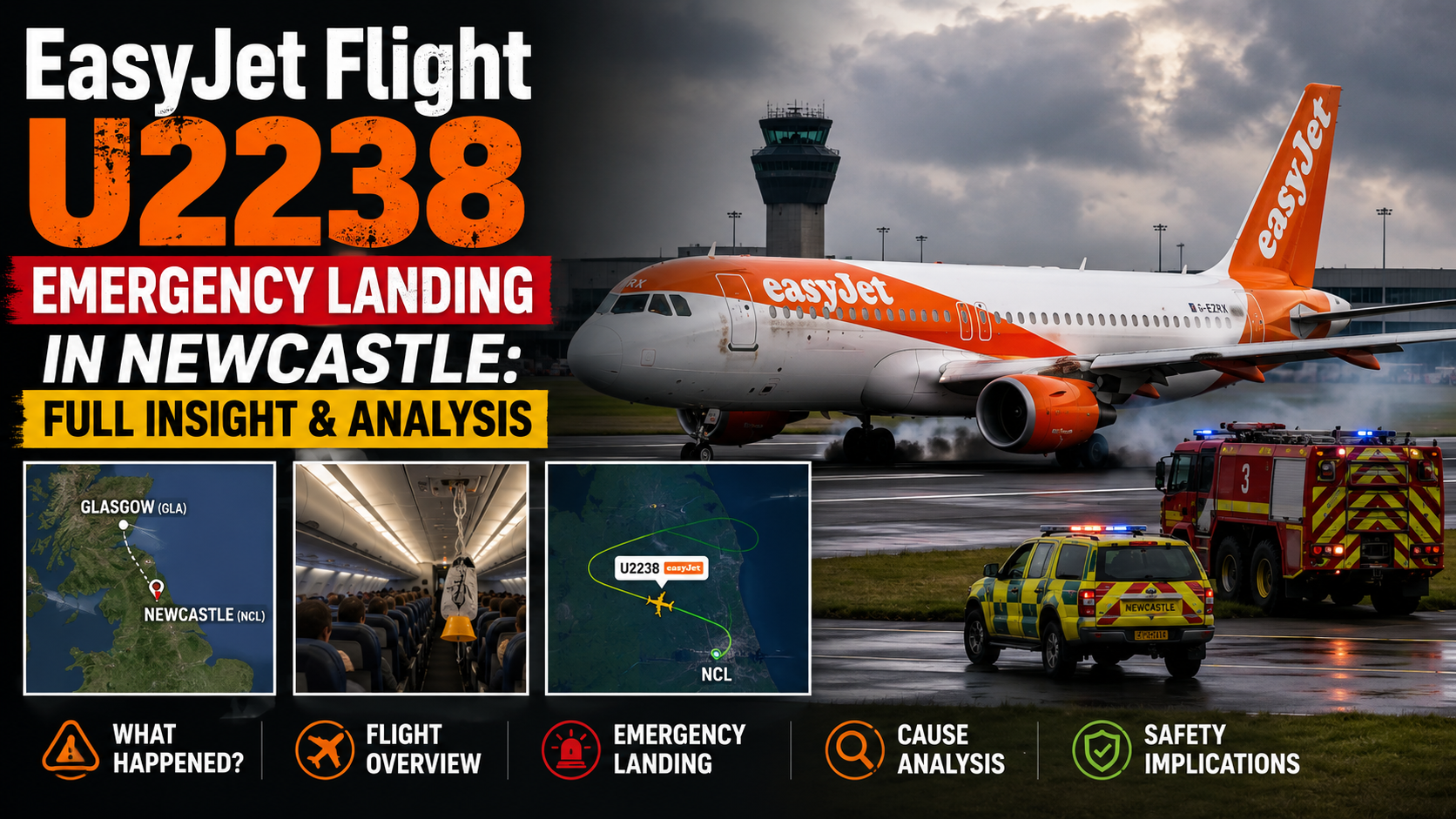
When a commercial airliner makes an unscheduled emergency landing, it naturally draws public attention and concern. One such notable incident was EasyJet Flight U2238 Emergency Landing Newcastle International Airport (NCL). Originally scheduled to fly from Copenhagen Airport (CPH) to Manchester Airport (MAN), the Airbus A320‑series aircraft had to divert due to an unforeseen situation onboard. In this detailed article, we break down the full timeline, reasons, safety protocols, passenger impact, and key takeaways so you can understand exactly what happened — without alarmism, and with aviation accuracy.
What Was EasyJet Flight U2238?
EasyJet Flight U2238 is a scheduled short‑haul service typically connecting Copenhagen in Denmark with Manchester in the UK. On October 27, 2025, this particular flight encountered an unexpected mid‑air situation that changed its route and triggered emergency procedures.
The aircraft involved was an Airbus A320‑214, one of the most widely used passenger jets in Europe — known for reliability and advanced safety systems.
The Timeline — How It Unfolded
Departure and Cruise Phase
Flight U2238 departed from Copenhagen late in the evening. The climb and cruise phase appeared routine as the aircraft crossed the North Sea, monitored by both Eurocontrol and UK air traffic services.
Medical Emergency Onboard
Mid‑flight at cruising altitude, cabin crew identified a serious medical emergency affecting one of the passengers. The situation was urgent enough that the pilots decided to declare a general emergency and divert — prioritizing life‑saving care over continuation to Manchester.
Emergency Declaration and “Squawk 7700”
Pilots transmitted a “Squawk 7700”, the internationally recognized emergency transponder code. This alerts air traffic controllers and surface emergency services that a flight has a critical issue requiring immediate priority handling.
Diversion to Newcastle
The flight crew evaluated the options and chose Newcastle International Airport (NCL) due to its proximity, runway capability, and strong emergency medical support. The aircraft began an emergency descent, cleared for priority landing at NCL.
Safe Touchdown
Around 11:00 p.m. local time, Flight U2238 touched down safely at Newcastle. Emergency response teams — including paramedics and fire services — were positioned and ready.
Why Newcastle Was the Best Choice
Geographic and Operational Advantages
Although Manchester was the original destination, Newcastle was geographically closer to the aircraft’s location when the emergency occurred. This allowed the plane to land more quickly and deliver the affected passenger to care faster.
Newcastle has long runways capable of accommodating large jets like the A320 and 24/7 emergency service readiness — including medical teams and ambulances — making it a logical choice for diversion.
How Emergency Procedures Work
Transponder Codes and ATC Priority
The Squawk 7700 signal is a standard aviation measure that automatically alerts controllers and adjacent aircraft when an aircraft is in distress. Controllers then clear the airspace and grant priority to the emergency flight.
Crew Coordination and Cabin Protocols
Once the emergency was declared, pilots and cabin crew coordinated carefully: maintaining control of the aircraft, managing passenger safety, securing the cabin, and communicating with ground services.
Passenger Experience and Crew Response
Passengers onboard reported a calm but serious atmosphere, with flight attendants making professionalism and reassurance a priority. Crew members are trained extensively for such scenarios — including first aid, communication, and emergency landings.
Despite the alarm such diversions can cause, most travelers experienced a controlled and smooth landing thanks to these established safety protocols.
What Happened After Landing
Medical Assistance
Medical teams were ready to meet the aircraft and quickly attended the passenger in distress. The individual was stabilized and transferred to a local hospital with proper care.
Flight Continuation and Delay
After the emergency was resolved and checks were completed, the aircraft was cleared to continue — eventually proceeding to Manchester, though delayed.
Airlines typically support affected passengers by arranging onward travel, providing care per regulations, and offering communications or accommodations where necessary.
Aviation Safety — Why Emergency Landings Happen
Emergency landings are rare but essential tools in aviation safety. They occur when immediate diversion to the nearest suitable airfield can reduce risk — especially when medical incidents, technical warnings, or urgent conditions arise.
Rather than reflecting danger, an emergency landing often signifies that safety procedures worked exactly as intended.
Passenger Rights After Diversions
Passengers affected by diversions like this have rights under UK and EU regulations — including assistance with rebooking, refreshment vouchers during extended waits, and accommodation support when necessary. Compensation may apply depending on the nature of the incident.
Lessons From the EasyJet U2238 Incident
Several key takeaways from this event include:
- Airlines prioritize safety first — diverting even when unclear issues arise.
- Pilots are trained for emergency decision-making.
- Emergency landings are controlled, not chaotic.
- Passenger well‑being always comes first.
Conclusion
The emergency landing of EasyJet Flight U2238 Emergency Landing in Newcastle International Airport was a textbook example of aviation safety in action. Triggered by an urgent medical situation, coordinated communication, and rapid response from pilots, crew, and emergency services ensured a safe outcome for everyone onboard. Rather than indicating danger, the diversion underscores the strength of global aviation safety procedures and the professionalism of crew responses.
Frequently Asked Questions
1. Why did EasyJet Flight U2238 divert to Newcastle?
It diverted after a passenger required urgent medical attention, and Newcastle was the closest suitable airport for a safe landing.
2. Was the landing safe?
Yes — the aircraft landed safely with emergency teams on standby, and no injuries to other passengers were reported.
3. What is “Squawk 7700”?
It’s an aviation emergency code used to alert air traffic control that an aircraft is declaring a general emergency.
4. Did the flight eventually reach Manchester?
Yes, after medical assistance and safety checks, the aircraft continued to Manchester with a delay.
5. Do passengers get compensation for diversions?
Rights vary; while medical emergencies are considered extraordinary circumstances, assistance and care are still provided per regulations.



Post Comment